
 go back
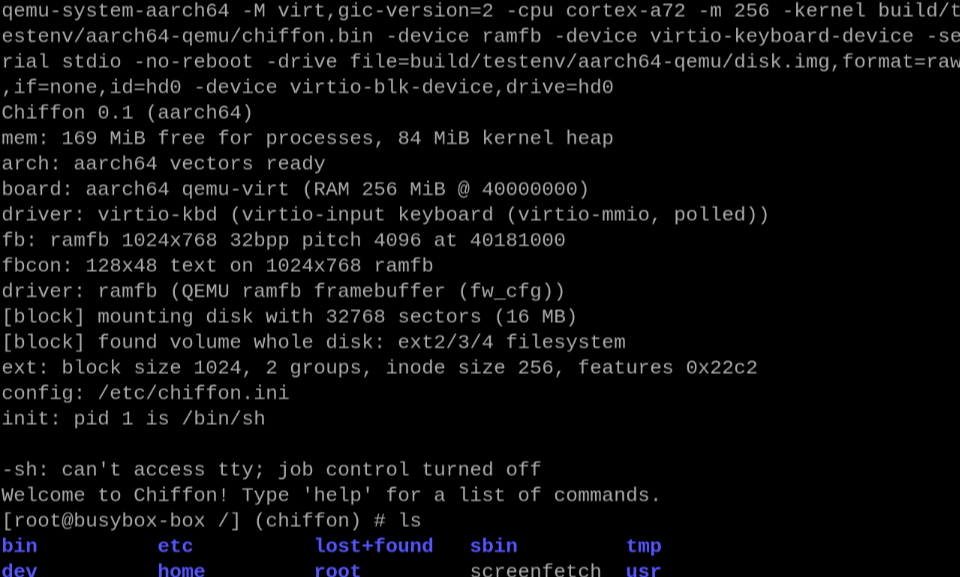
Today, I would like to introduce you, to another side project of mine: Chiffon. Chiffon is a hybrid kernel that is not Linux but Unix-like that leans much closer to the monolithic side, think of Windows NT/XNU. Being that the kernel itself only resides for thousands of lines of C code, it's just another shitty kernel, with nothing special than being a pastime project (p.s. it's vibecoded).
FUN FACT: Chiffon gets its name from a maimai character of the same name!
First iterations
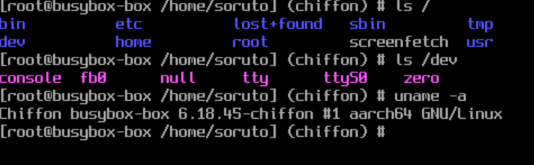
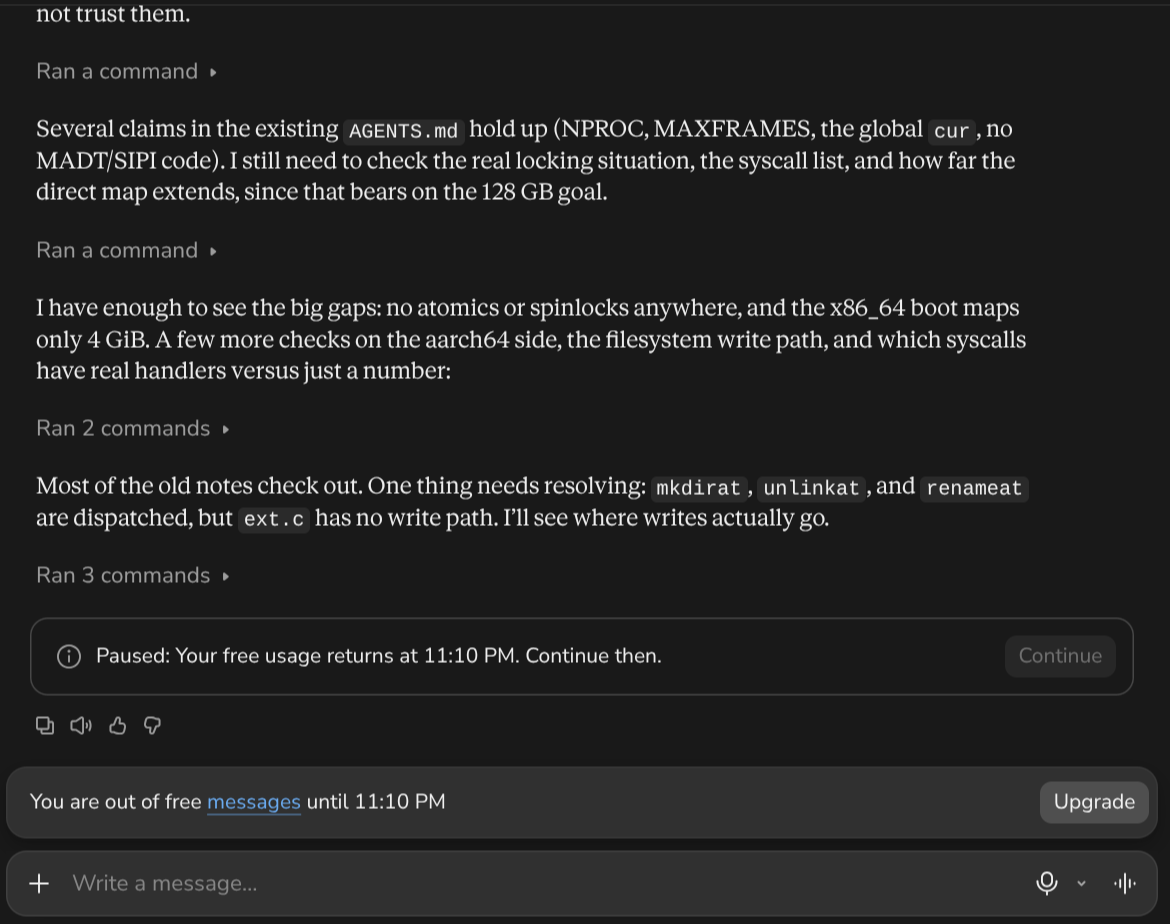
Originally, Claude (Sonnet 5.5) actually wrote 99% of Chiffon's code, while I directed the project. It started off small, as a custom environment to run my statically linked musl BusyBox during class. To be honest, all of it, including the prompts, are typed from my phone in the Claude app.
As my demands grew bigger, I also wanted Chiffon to be a microkernel, but Claude never did my implementation well. It did, however, boot BusyBox well
Now, why did I vibecode a kernel in the first place? It's quite hard to answer why, but the most common reason being that dealing with lower level systems was extremely hard, and also wanting a way to learn how kernels work. I know, I know, I should've done this earlier, right? Wrong. I'm not a kernel expert but would love how does it work, and its implementations. Coding on bare microcontroller silicon is quite easy for me (since I'm familiar with it). But wouldn't it be fun to just make an OS, too?
Of course, the most important thing of an operating system is certainly a kernel. Initially, I wanted Chiffon to be a microkernel, but yeah, Claude doesn't understand my 400-word prompt easily in a single gulp. Why a microkernel? They're modular. Most drivers run in user space, while the kernel only runs in one space. But I wasn't picking the microkernel out of spite, I am actually inspired by Huawei's LiteOS series of microkernels, which my Huawei watch runs on, specifically LiteOS-M.
I find LiteOS-M quite challenging to compile on ARM (on a Pi 5), because it's tightly coupled to OpenHarmony, which would need TENS OF GIGABYTES and a BEEFY PC to compile (can't compile on my main ThinkPad because at the time of writing, it broke).
So yeah, and the rest is history. That's how I got inspired to create Chiffon
Where do I test Chiffon that led to the version updates?
I test Chiffon itself using my own proprietary environment called milkOS. I know, you'll brag me about it, like "make milkOS open source!!!111", but here's a reason why I should say no: it has lots of breaking code that will make the system unstable, and may cause irreparable harm to your computer. So yeah, that's just about how I test Chiffon.
Why milkOS? Why not something else?
Originally, I don't have a name for my testing environment, in a normal sense. A person who I know of, who goes by the name sei, did say something about naming my environment. At first, I thought he was doing something at random, but I knew that was a good name after taking a closer look.

Initially, it was supposed to be mirukuOS, but I hear that as quite non-techical, so yeah, milkOS.
Chiffon vs Linux: what's the difference?
I wouldn't say this to be compared between the two, because it serves different purposes. One benefit of Chiffon is that you can:
- make your own environments/OSes/Chiffon distros
- experience a GPL-less life
The bounds between the GPL and corporate code, as well as GPL's viral effects, have become a potent point for proprietary code, and that could be why Sony never chose Linux and instead uses FreeBSD for Playstations.
And yeah, corporates live by a love-hate relationship with the GPL, which is why Chiffon is MIT! The MIT license allow greater flexibility for corporations looking to use Chiffon as part of their systems (corporates wouldn't choose Chiffon, probably). I don't intend to make Chiffon a stable corporate software, but rather a shitty kernel, but if this happens, I would highly thank you.
x86 stuffs: Chiffon in x86_64
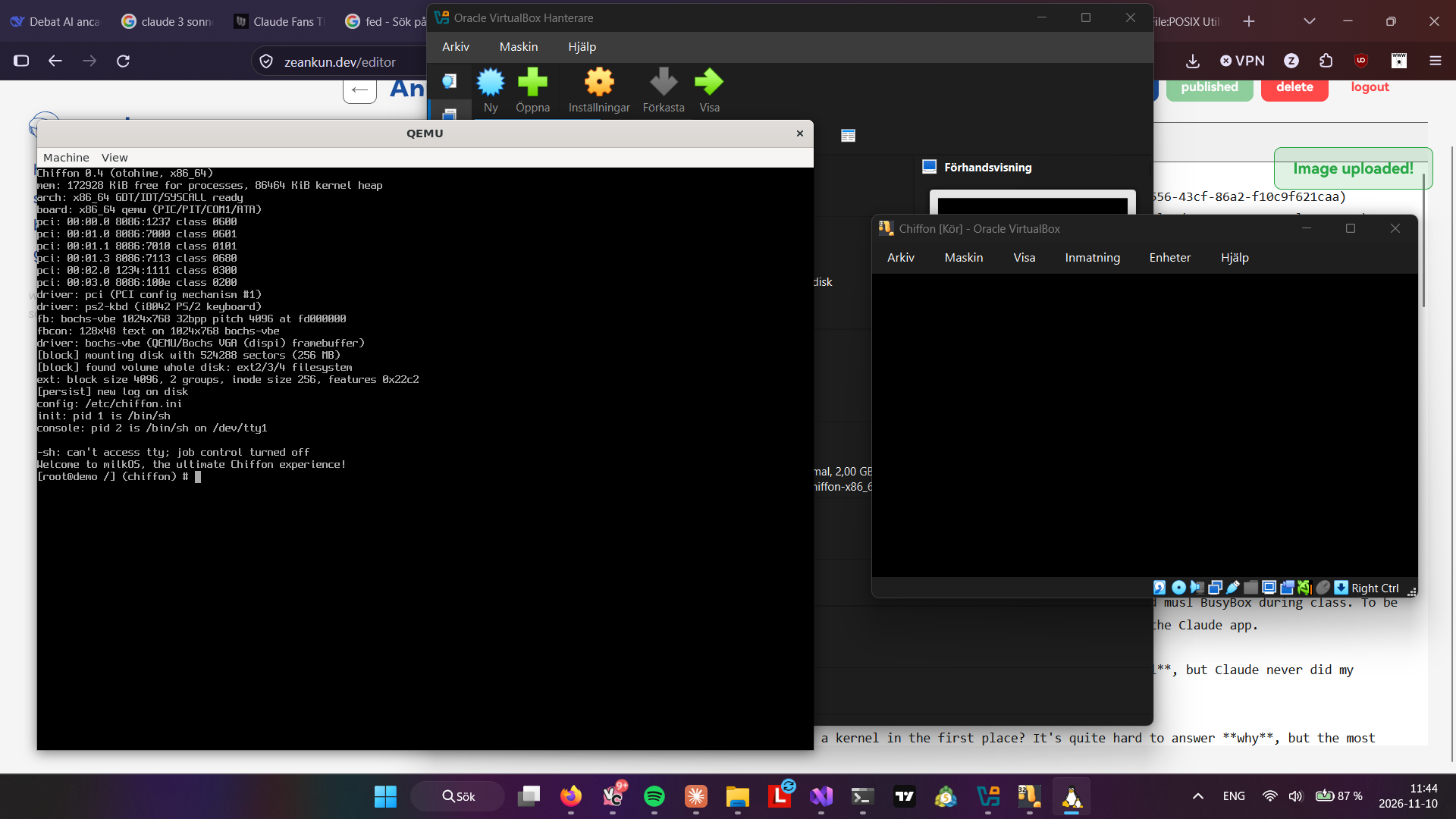
Chiffon on x86 works flawlessly on systems such as QEMU GFX and normal UART console. However, I would like to highlight that out of the box VGA for VirtualBox isn't supported yet, and yes, VirtualBox is near-real, so you shouldn't boot this on a real machine, yet.
Okay, why a musl BusyBox instead of glibc BusyBox?
This is quite an interesting question to ask, as there are why the BusyBox must be a musl variant: glibc is way too bloat for Chiffon, and I haven't implement the full GNU extensions.
One major risk of forcing GNU extensions for a kernel like Chiffon, is that I am afraid that I must license Chiffon as GPL, which defeats the purpose of corporate friendliness.
Now, I don't want to disturb Stallman's lair in the FSF (just for having static glibc in Chiffon), so statically linking BusyBox to musl is technically and legally a safe way to do.
If you want a true non GPL experience, then you should compile Toybox with Chiffon. Don't worry, it's like BusyBox, and probably the same, but you get a 0BSD license, which highly benefits you, or the corporates.
The million dollar question: can it run Doom?
As of Chiffon 0.3 (shama), Chiffon can now run DOOM. Of course, this is just an experiment, and I am not in the mood on writing docs on how to get Doom up and running. However, there are caveats, including:
- You must run this on a Chiffon graphics environment
- Ctrl key to fire momentarily doesn't work
I'll probably fix these at the end of exams, but yeah, it runs!
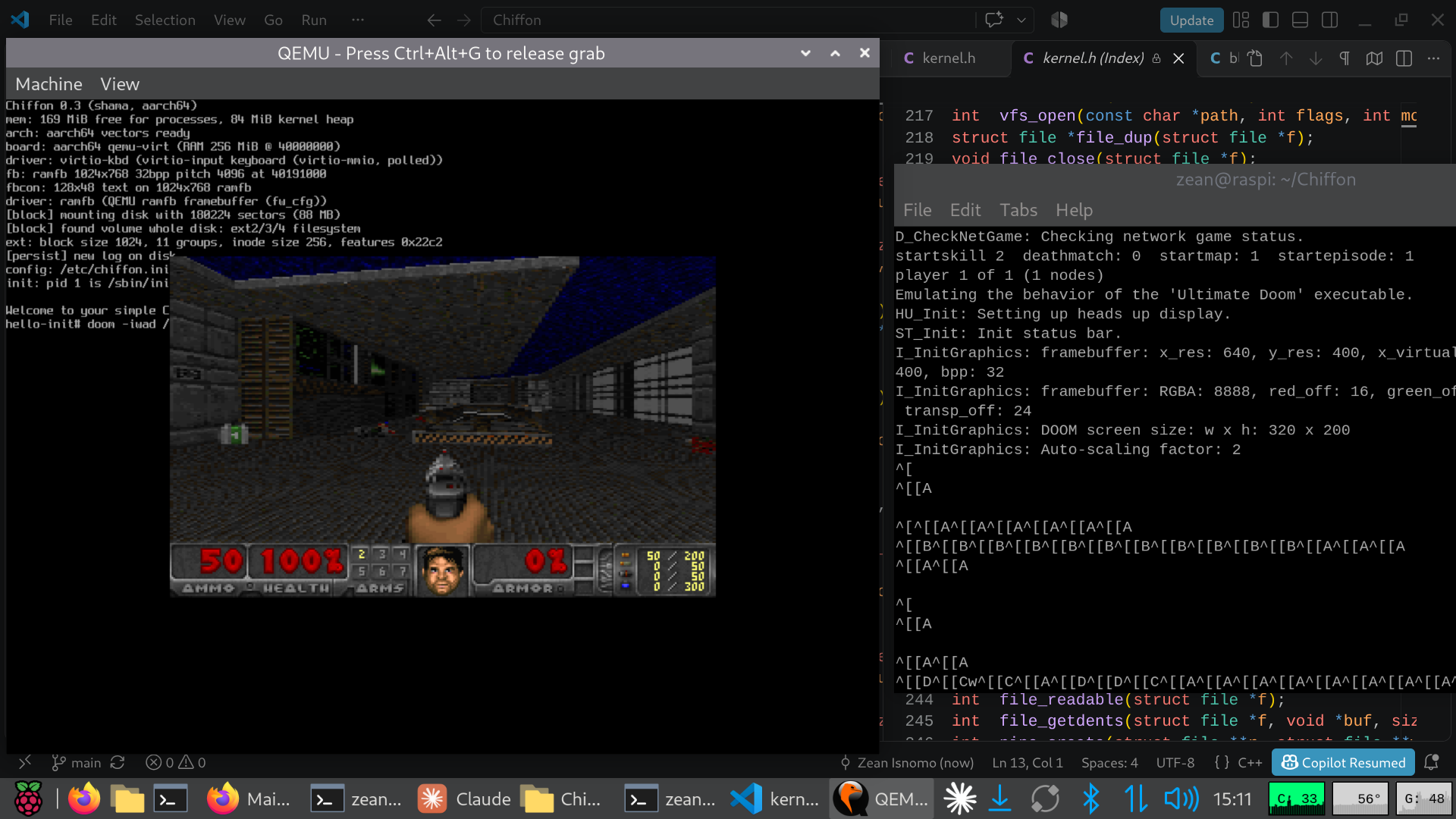
DOOM (freedoom) runs on Chiffon 0.3 inside of QEMU on a Raspberry Pi 5!